STOCK LEVEL: LOW

LOWEST PRICE EVER

Advertorial
Doctor of Physical Therapy Warns: Your Knee Pain Has Nothing to Do With Cartilage

Why millions of people over 50 keep getting treated for the wrong problem — and the 3-phase joint approach that's finally delivering lasting results.
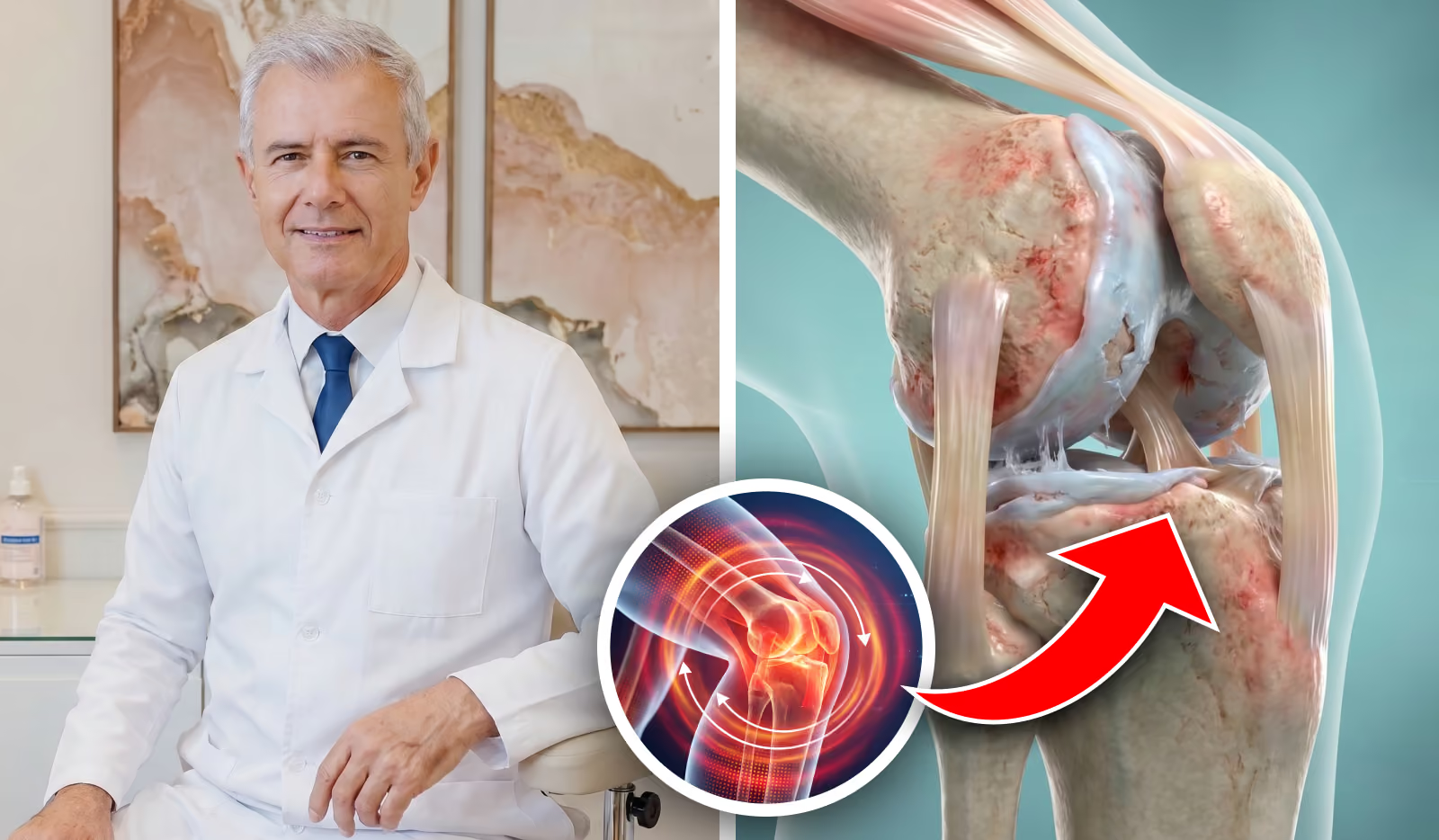
THE REAL REASON YOUR KNEE TREATMENTS KEEP FAILING
If you've been managing knee pain for more than six months — trying anti-inflammatories, getting injections, going through rounds of physical therapy — and you're still not meaningfully better, I want to share something before your doctor recommends the next step.
The treatment you've been receiving may be targeting the wrong cause entirely.
I've spent 20 years evaluating and rehabilitating knees. Not just athletes — everyday people over 50 with the kind of chronic, limiting pain that comes from years of use, inactivity, or injury.
And the most consistent thing I encounter isn't on any X-ray. It's during the functional evaluation that I see muscles that should be working — aren't.
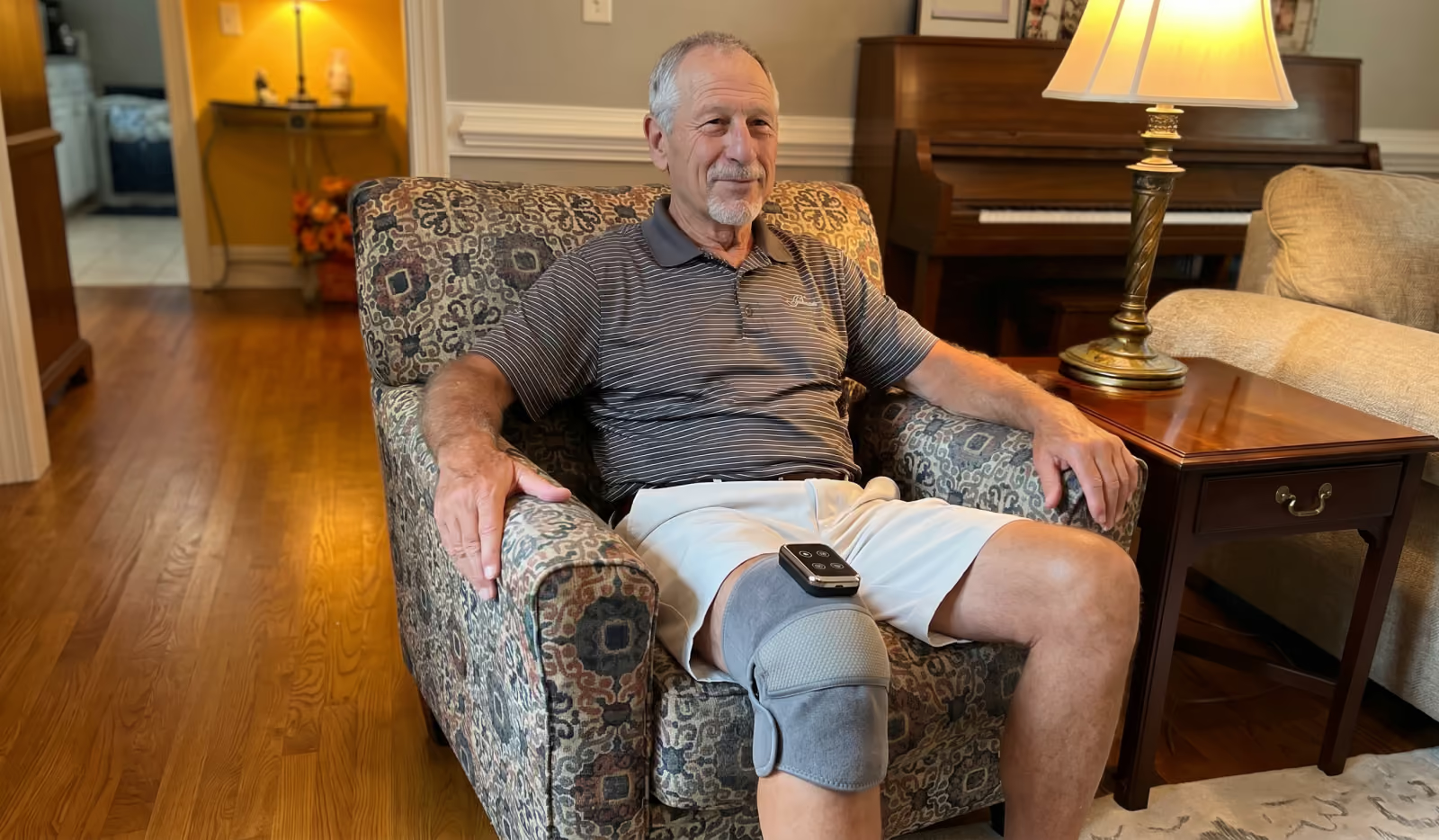
THE MUSCLE CONNECTION MOST DOCTORS MISS
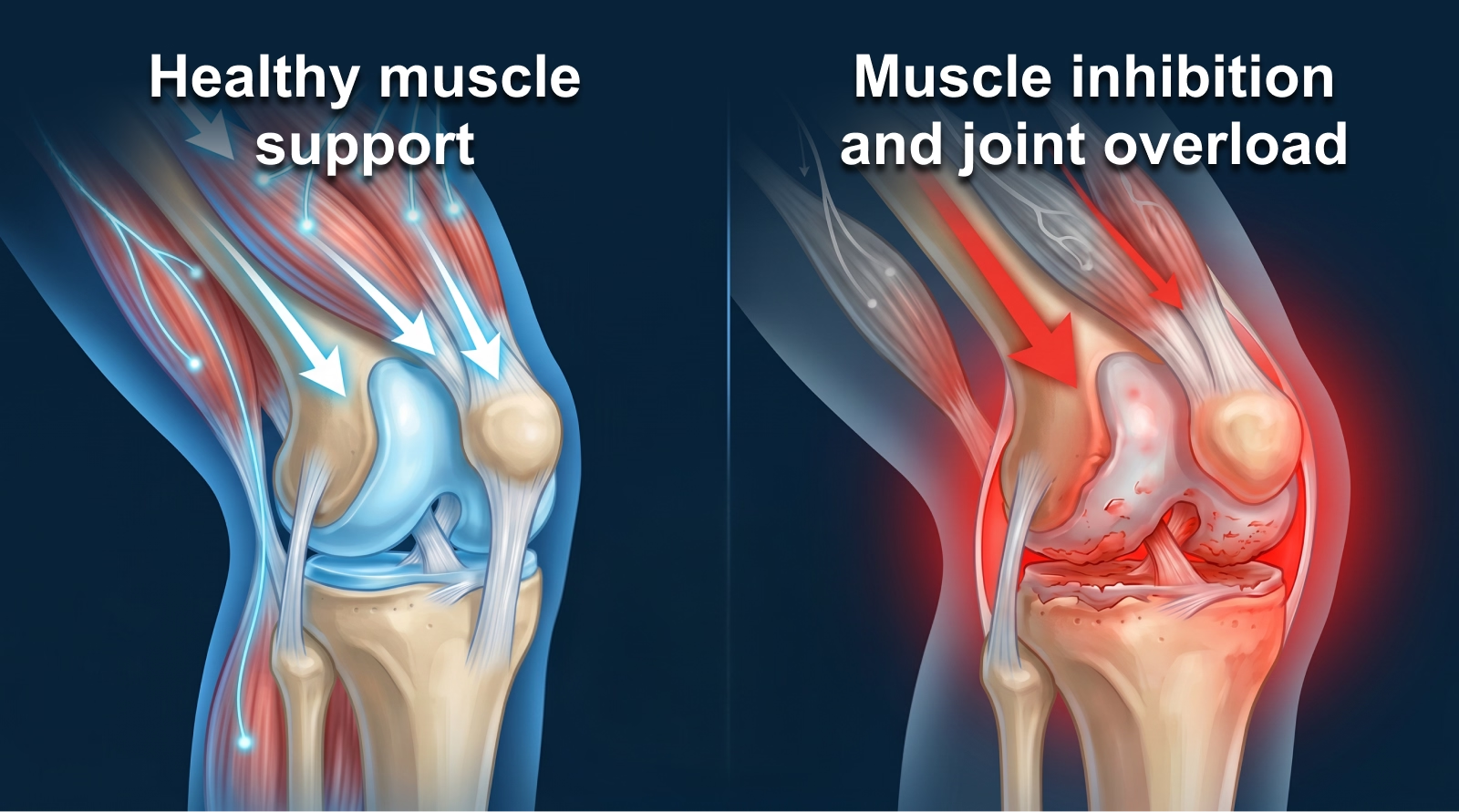
The muscles surrounding your knee — your quadriceps, hamstrings, and calf complex — are designed to absorb the majority of mechanical load on your joint with every step. When they function correctly, they act as shock absorbers. The cartilage handles what remains.
Here's what happens after 50, after an injury, or after sustained pain keeps you from moving normally:
Those stabilizing muscles begin to weaken. Then they begin to disengage in a more significant way. Researchers call it arthrogenic muscle inhibition — a documented reflex where the nervous system progressively reduces activation of the muscles surrounding a painful or swollen joint. It's your body's protective response. It's also a trap.
When those muscles go offline, the full mechanical load falls on the joint itself.
The cartilage, which was never designed to carry that load alone, absorbs forces it can't handle. Inflammation increases. Pain increases. And because pain causes you to move less — and moving less accelerates the muscle loss — the cycle feeds itself.
This is the mechanism behind most chronic knee pain. And it's rarely the thing being treated.
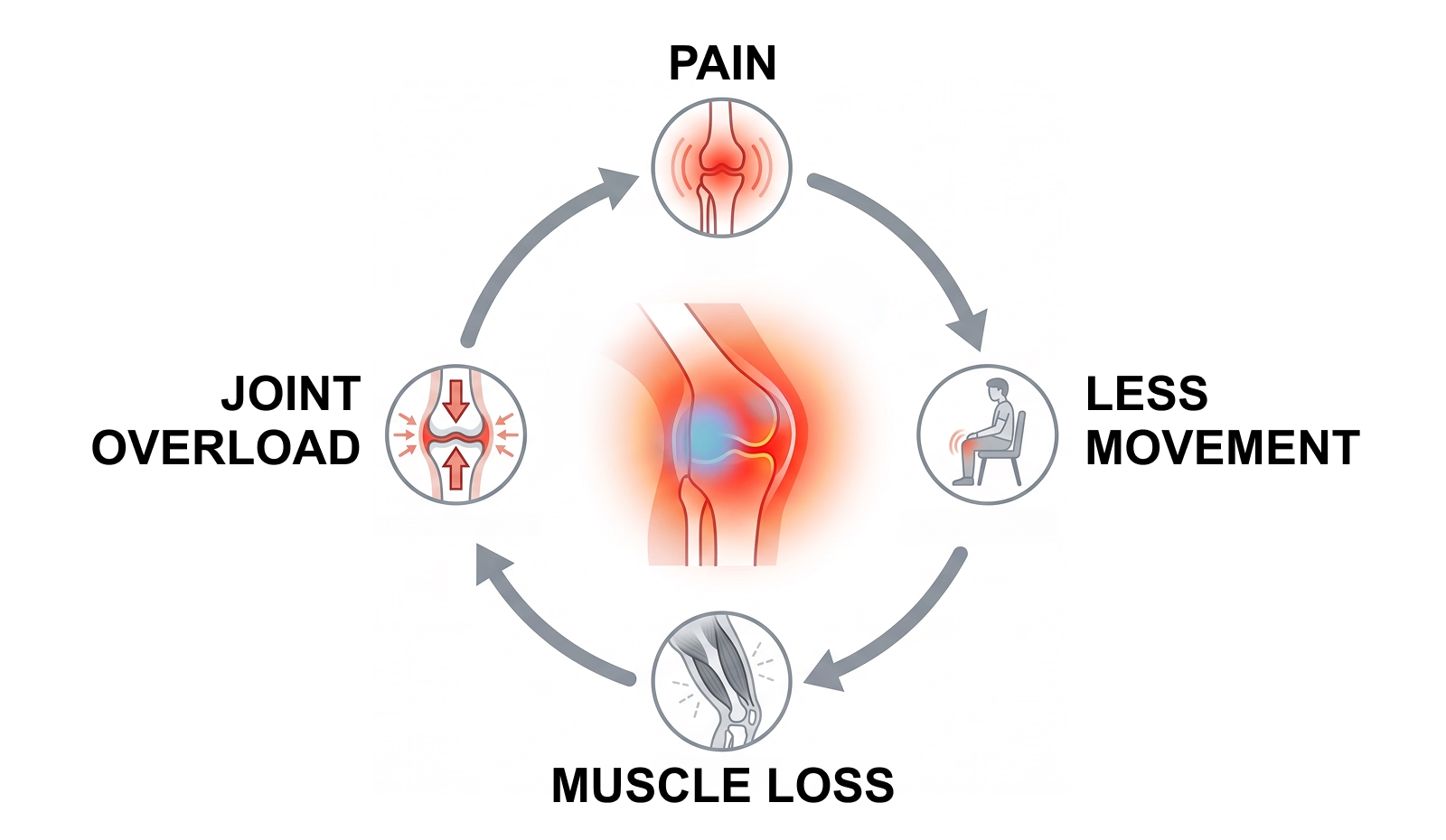
THE CYCLE THAT KEEPS YOU STUCK
Pain → reduced movement → muscle atrophy → increased joint load → more pain.
Every cortisone injection interrupts the inflammation. It does nothing for the muscular dysfunction underneath.
The injection works for six weeks. Then eight weeks of relief. Then four. The diminishing returns aren't a coincidence — the underlying driver continues progressing while the inflammation is being managed.
Meanwhile, research published in the New England Journal of Medicine found that arthroscopic surgery targeting knee cartilage performed no better than a sham procedure in long-term pain outcomes for osteoarthritis patients.*
And imaging studies have repeatedly shown that degree of cartilage damage on an X-ray does not reliably predict pain levels.*
The cartilage changes are real. But they are not driving your pain the way you've been told.
That's the opening for a genuinely different approach.
THE 3-PHASE JOINT ACTIVATION SEQUENCE
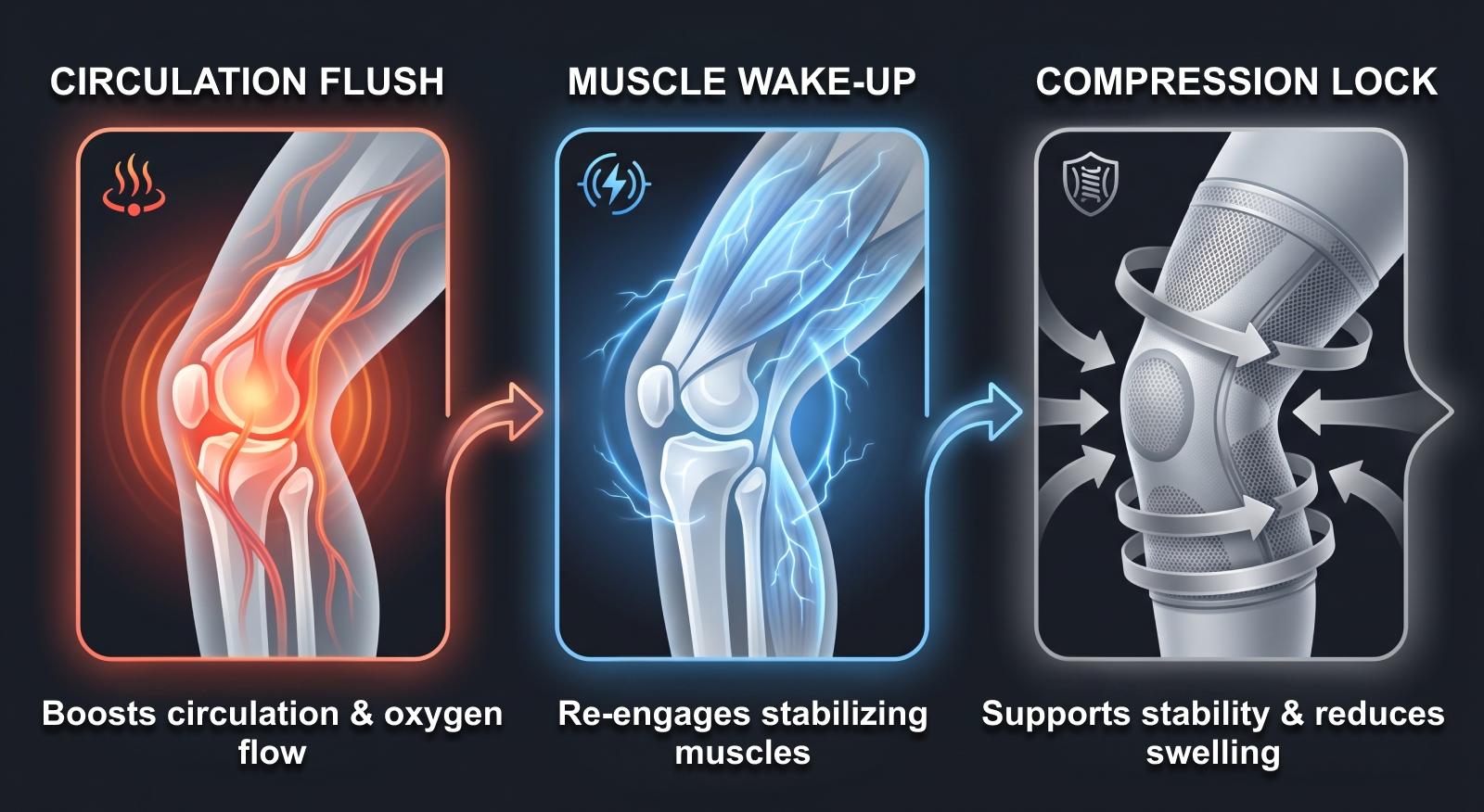
Addressing knee pain at the root level — not just managing the inflammation — requires three things working simultaneously. I call this the Joint Activation Sequence.
Phase 1: Circulation Flush
Targeted therapeutic heat (40–42°C) opens the blood vessels surrounding the knee joint, significantly increasing circulation to tissue that has become chronically under-supplied. This matters because inflamed, oxygen-starved tissue cannot heal — and because warming the joint creates the physiological conditions that allow Phase 2 to work effectively.
Phase 2: Muscle Wake-Up
EMS (electrical muscle stimulation) delivers targeted nerve signals to the stabilizing muscles around the knee — the same muscles that arthrogenic inhibition has progressively taken offline. Consistent stimulation prompts these muscles to re-engage and strengthens the neural pathways that activate them. Over time, the mechanical load begins shifting back to the muscles. The joint begins receiving the protection it was designed to have.
Phase 3: Compression Lock
Graduated compression maintains improved blood flow from Phase 1, reduces residual swelling, and delivers proprioceptive feedback — the neuromuscular signals that help your stabilizing muscles calibrate in real time. Without this third phase, the gains from the first two degrade faster between sessions.
Miss any one of these phases, and you are only partially addressing the problem.
WHAT THE RESEARCH CONFIRMS
The physiological basis for each phase is well-established.
Research from the Cleveland Clinic supports the role of thermotherapy in improving tissue perfusion and reducing articular inflammation in knee osteoarthritis. Studies catalogued by the National Institutes of Health confirm EMS-based neuromuscular stimulation as a supported approach for quadriceps re-activation in knee OA patients — a direct intervention for the arthrogenic inhibition mechanism. The role of compression in joint proprioception and swelling management is validated across multiple orthopedic rehabilitation protocols.
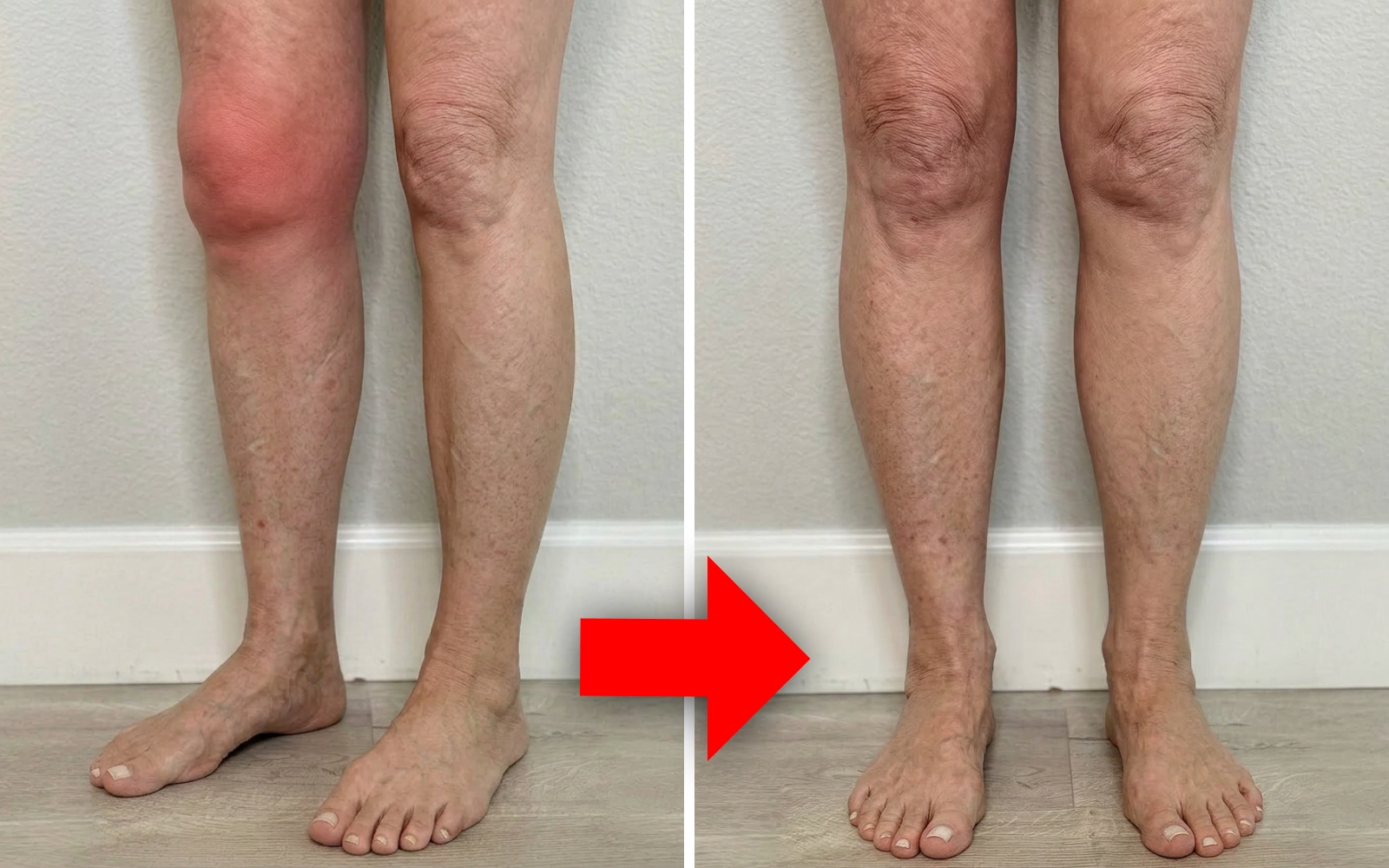
The evidence has been there for years. What hadn't existed was a practical device that delivered all three phases simultaneously in a single daily session designed for home use.
"In a recent survey of EMSense Knee users, 82% reported meaningful reduction in pain and improved mobility within the first 3–4 weeks of daily use."
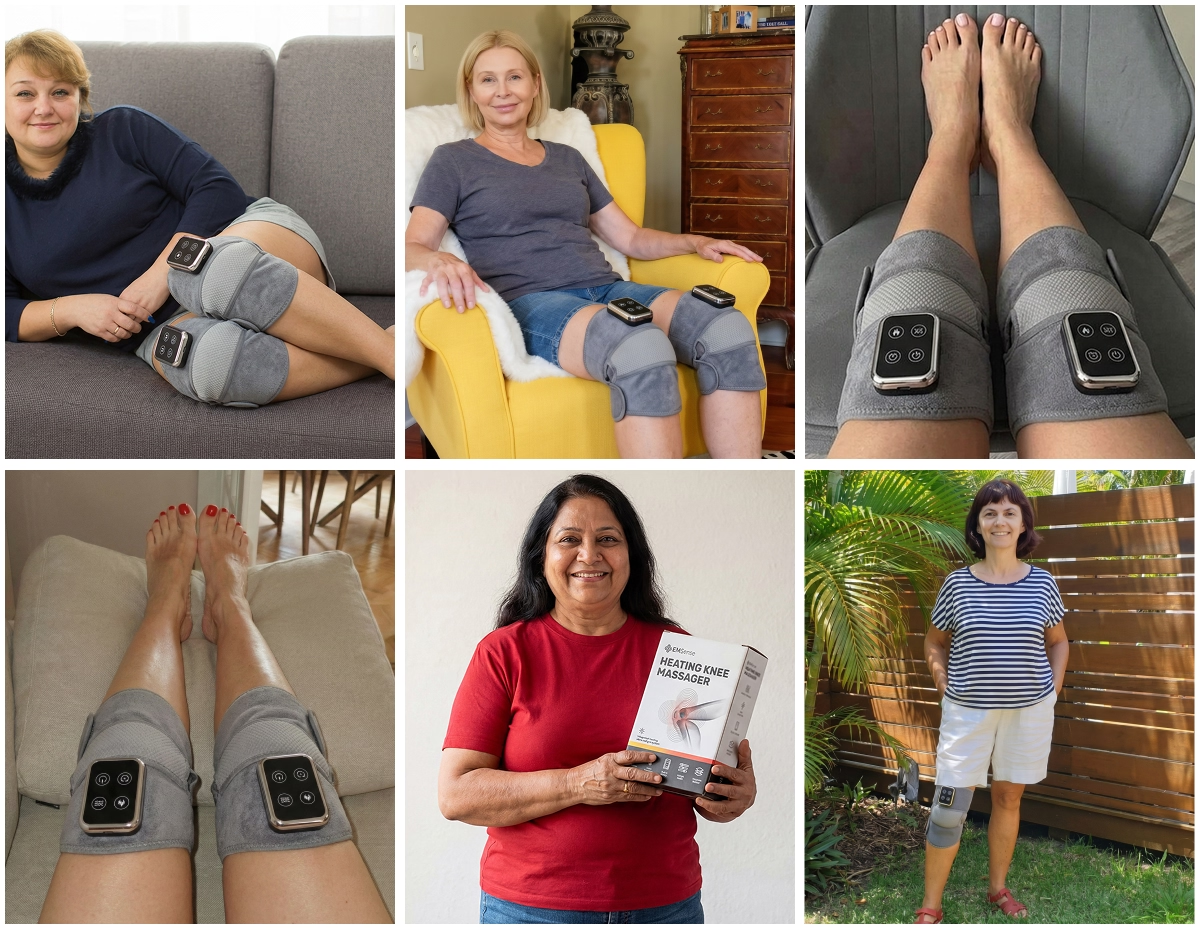
Try EMSense Knee Risk-Free — 30-Day Guarantee

FLASH SALE IS HERE!
WHAT PATIENTS ARE EXPERIENCING
"As a nurse, I'm on my feet 12 hours a day, and by the end of every shift my knees were stiff and aching. EMSense takes the soreness down and helps me relax before bed. I wake up with knees that actually feel ready for another shift!"
Sandra H. ⭐⭐⭐⭐⭐
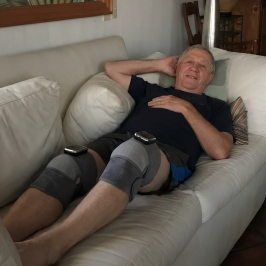
"I've had chronic knee pain for years from arthritis. After using EMSense I finally get relief without relying on pills. Within a week, the stiffness eased up, and now I can walk and climb stairs comfortably again."
Paul M. ⭐⭐⭐⭐⭐
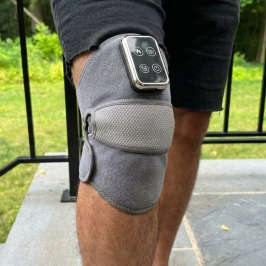
"Knee pain made mornings soo painful — getting out of bed felt like a chore. This device changed that. The stiffness is gone and I move freely again. I wish I had found this sooner."
James R. ⭐⭐⭐⭐⭐
COMPARING THE OPTIONS
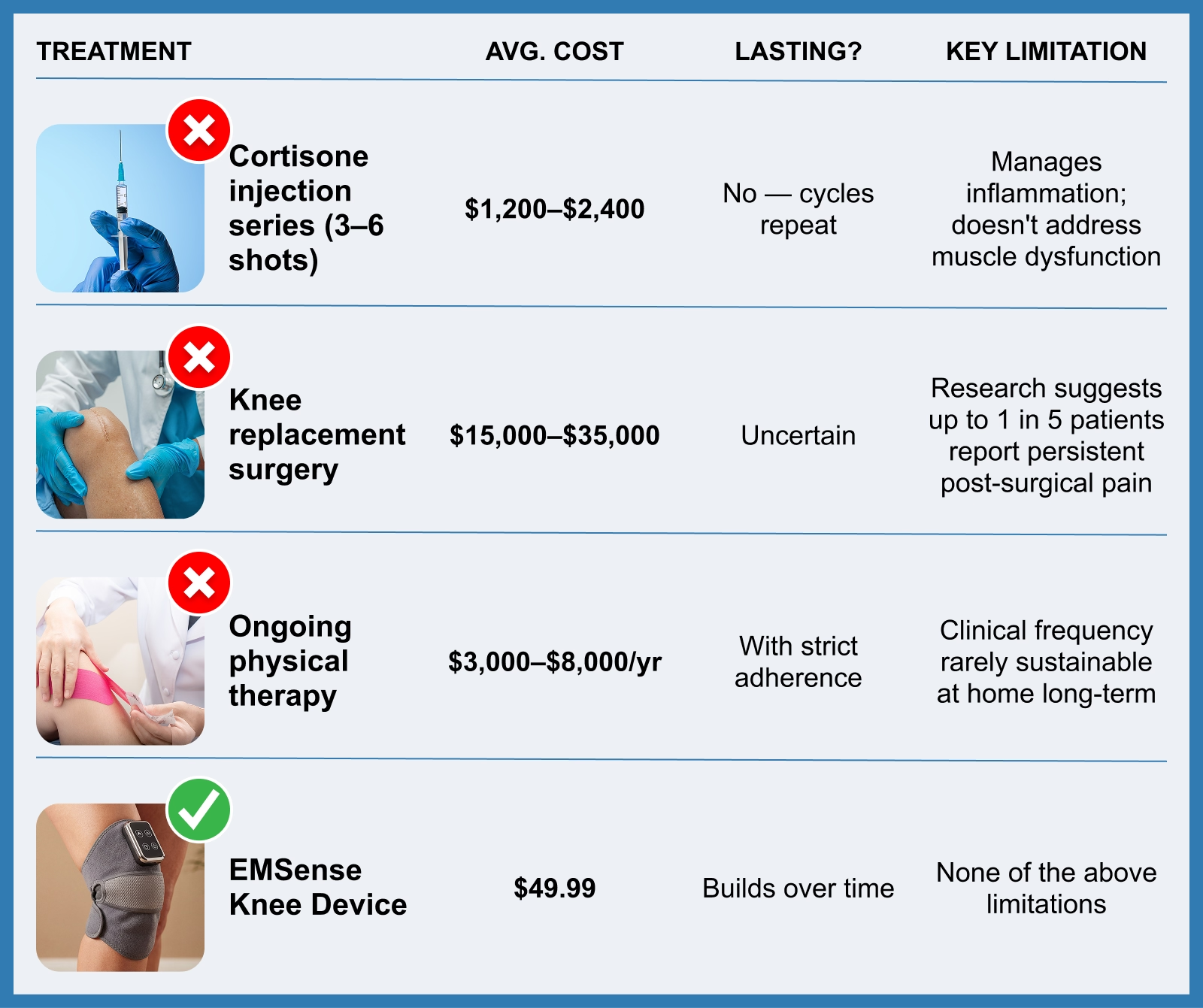
>>> GET 60% DISCOUNT <<<
MY HONEST RECOMMENDATION
I do not recommend products unless I believe in the underlying mechanism.
What EMSense has built for the knee is the first practical home device I've evaluated that delivers all three phases of the Joint Activation Sequence simultaneously — heat, EMS stimulation, and compression — in a single 15-minute daily session. For patients who have been in the injection cycle without sustainable improvement, this directly addresses what the injections have been leaving untreated.
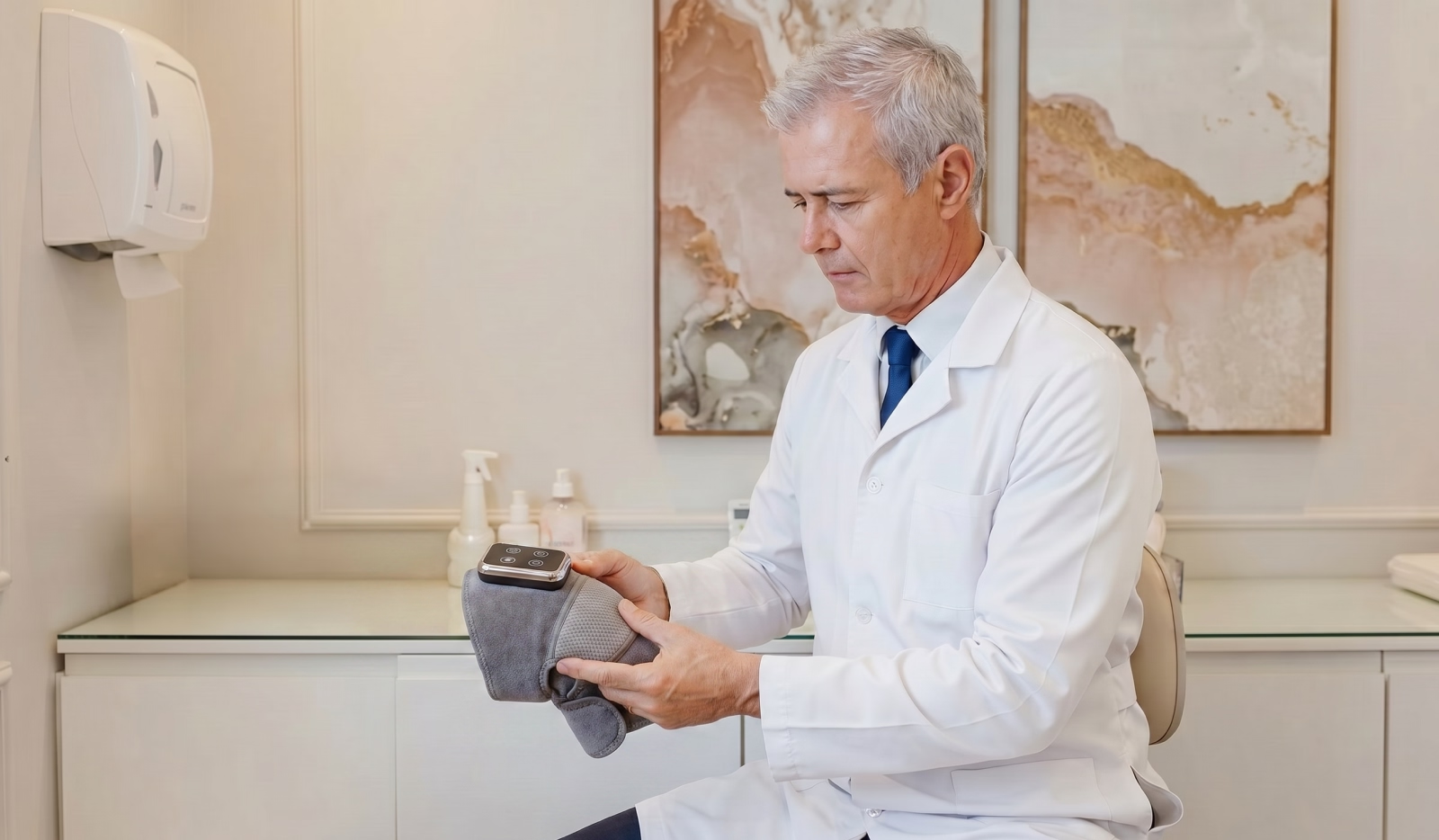
Results will vary. Knee pain is complex, and individual response to any intervention depends on factors no single device can fully control. But if you have been following the standard protocol — injections, rest, more injections — for a year or more without lasting change, that is important information. It suggests the standard protocol is not addressing your underlying driver.
My recommendation: use it daily for the first 30 days before drawing a conclusion. The neuromuscular re-engagement from Phase 2 takes time to accumulate. Patients who stop after one week have not given the mechanism a fair evaluation.
>>> Claim Your EMSense Knee Device 60% OFF <<<
TRY IT RISK-FREE TODAY
EMSense is not sold in pharmacies or on Amazon. They sell directly to maintain quality and offer a full 30-day money-back guarantee.
Path 1: Continue what hasn't been working.
More injections. More anti-inflammatories. Temporary relief, while the muscular dysfunction driving your pain progresses quietly in the background.
Path 2: Address the actual cause.
Fifteen minutes a day. All three phases working together. The approach that targets what the injection cycle has been leaving untreated.
The next step is yours.
>>> Start Your Recovery - 30-Day Money-Back Guarantee <<<
GET EMSENSE 60% OFF NOW
FLASH SALE IS HERE!
Here’s What to Do Now:
- Click the green button below to access our secure checkout page.
- Choose how many EMSense Massagers you want (most people grab 2 or 3).
- Complete your order while supplies last.
GET MY DISCOUNT
FLASH SALE IS HERE!
Don’t Let Pain and Numbness Control Your Life
If you don’t take action now, the problem will likely get worse.
The nerves won’t magically heal on their own - and every day you wait makes recovery harder.
But with EMSense, you have a chance to help speed up the process.*
Imagine getting your mobility, your freedom, and your life back.
All it takes is one small step.

30-Day Money-Back Guarantee. The EMSense team is so confident in their device that every purchase is fully protected. If you don't feel a difference, you pay nothing.
👉 Click below to secure your EMSense Massager with 60% OFF while supplies last!
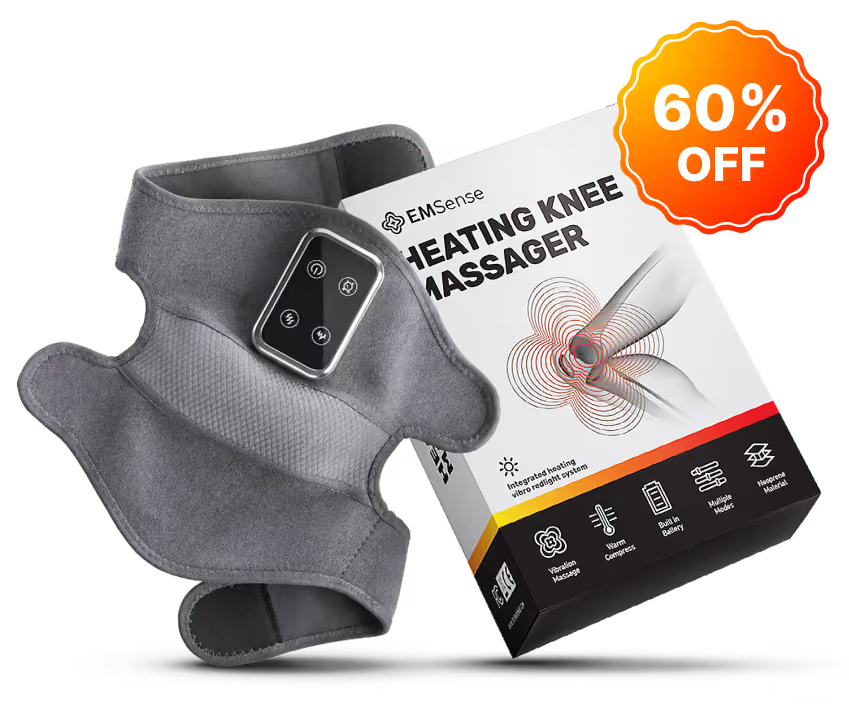
Click below to secure your EMSense Massager with 60% OFF while supplies last!
FLASH SALE IS HERE!
🚨 Sell-out risk: High 🚨




Reference List:
Customer Reviews